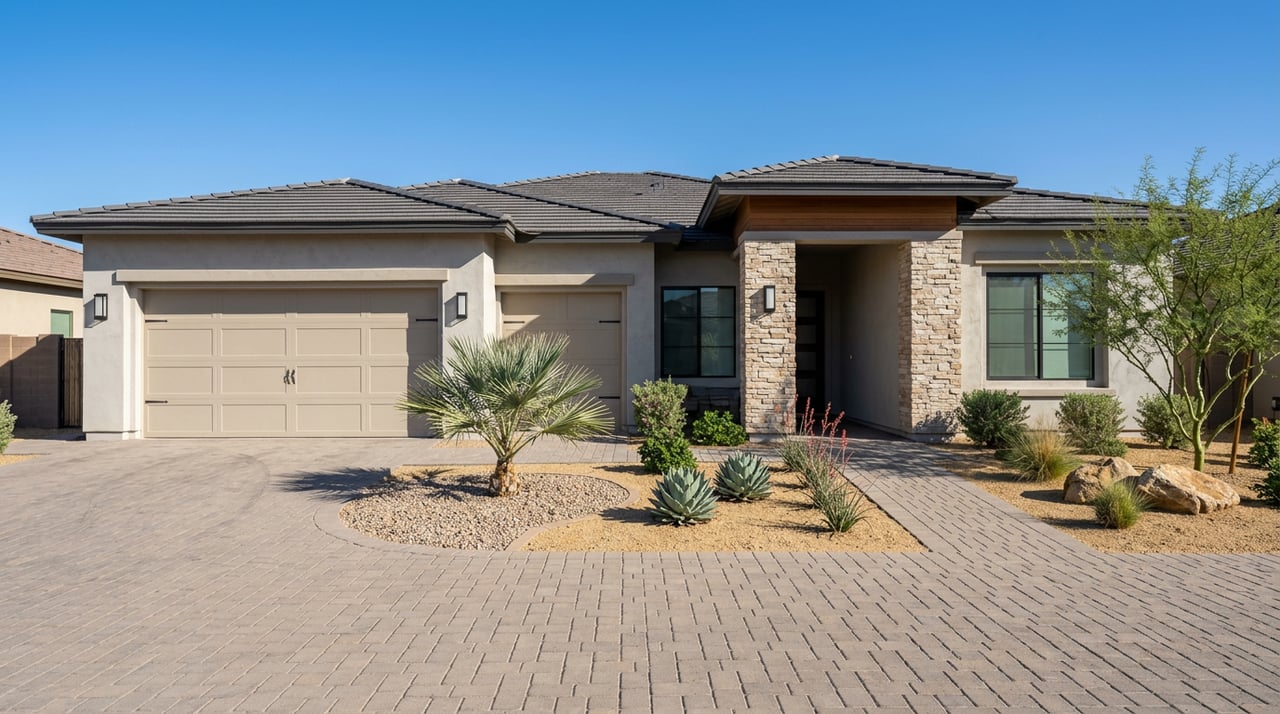
Eyeing a luxury home in Summerlin, Henderson, or a custom build with sweeping Strip views? If your loan amount will be above the local conforming cap, you are in jumbo territory. That changes how lenders review your file, how rates are priced, and how fast you can close. In this guide, you will learn the current Las Vegas jumbo threshold, what lenders look for, how jumbo rates compare, and how to get fully prepared before you tour high‑end listings. Let’s dive in.
What counts as a jumbo in Las Vegas
A jumbo mortgage is any first mortgage that exceeds the Federal Housing Finance Agency’s conforming loan limit. In Clark County for 2024, the one‑unit limit is $766,550. Any first mortgage above that number is considered a jumbo. You can verify current limits using the FHFA conforming loan limits table.
Because median prices in greater Las Vegas are often below the jumbo threshold, you will mainly encounter jumbos in higher‑end enclaves. Areas like The Ridges, MacDonald Highlands, and parts of Summerlin or Henderson with luxury new builds and custom homes are common examples.
How jumbo underwriting works
Jumbo loans are non‑agency, so lenders apply more conservative rules and manual reviews. Exact requirements vary by lender, but you can expect tighter credit standards and more documentation.
Credit, income, and reserves
- Credit score: Many lenders look for 700 to 760+ for best pricing, with 720+ common for favorable terms.
- Debt‑to‑income ratio: A typical maximum is 43 to 45 percent, though some lenders go higher with strong compensating factors.
- Reserves: Be ready to document 6 to 12 months of PITI in liquid reserves for a primary home. Second homes and investment properties often require 12+ months.
Down payment and LTV
- Loan‑to‑value: Many jumbo programs allow up to 80 percent LTV with 20 percent down and no mortgage insurance.
- Lower down payment options exist, often 10 to 15 percent, but they usually come with higher rates, stricter credit, and larger reserve requirements.
- Mortgage insurance is uncommon for true jumbos. Lenders typically prefer larger down payments or structured second‑lien strategies.
Documentation checklist
Jumbo underwriting relies on full, well‑sourced documentation. Expect to provide:
- Two years of signed tax returns, W‑2s or 1099s, and recent pay stubs.
- Two to three months of bank and asset statements, including retirement and brokerage accounts.
- Letters of explanation for large deposits and documentation for any gifts.
- For self‑employed borrowers, business tax returns, profit‑and‑loss statements, or bank‑statement programs where offered.
For a quick refresher on mortgage paperwork, review the CFPB’s guidance on documents needed to apply for a mortgage.
Property and appraisal factors
- Property type matters. Condos, planned communities, and unique custom homes can face extra scrutiny and project reviews.
- Luxury properties may require enhanced appraisals or even two appraisers. Limited comparable sales in high‑end neighborhoods can extend timelines.
- Occupancy drives terms. Second homes and investments usually see higher rates, lower allowable LTVs, and higher reserve requirements than primary residences.
Rates and costs you should expect
Historically, jumbo rates carry a modest premium over conforming loans. In many markets the difference has been only a few tenths of a percent. The spread can widen or narrow depending on investor demand and bank appetite for jumbo volume. For a sense of general mortgage rate movement, watch the Freddie Mac Primary Mortgage Market Survey, then ask lenders how their jumbo pricing compares week to week.
Your specific rate will depend on credit score, LTV, loan amount, occupancy, property type, and documentation program. Jumbo loans can also include slightly higher fees or discount points for preferred pricing. Appraisals on luxury homes often cost more due to property complexity and the need for additional analysis.
Rate locks are important to plan in advance. Policies differ by lender, and lock periods can affect pricing. The CFPB explains how locks work and what to ask in its guide on mortgage rate locks.
Get financing ready before touring
In the luxury segment, strong pre‑approvals are the norm. Sellers and listing agents want to see that your financing is true to the numbers, not just a quick pre‑qual.
Step‑by‑step preparation
- Choose experienced jumbo lenders
- Interview a mix of portfolio banks, national jumbo lenders, and local private banks.
- Ask about experience with Las Vegas luxury neighborhoods, condo project approvals, and appraisal practices.
- Secure a robust pre‑approval
- Request an “underwritten pre‑approval” or a conditional approval that reviews income, assets, and credit.
- The CFPB outlines the difference in its overview of pre‑qualification vs pre‑approval.
- Gather documents early
- Two years of tax returns, recent W‑2s or 1099s, two recent pay stubs, and 2 to 3 months of bank and asset statements.
- Photo ID, statements for any existing mortgages, and letters of explanation for large deposits.
- Trust or entity documents if buying in a trust or LLC.
- Prepare funds and reserves
- Document sources for the down payment, any gift funds, and post‑closing reserves.
- Discuss appraisal logistics
- Confirm timelines, potential need for specialty or dual appraisals, and how value disputes are handled.
- Plan your rate‑lock strategy
- Understand lock lengths, extension fees, and how they fit your offer contingencies and closing target.
Timeline to expect
- Pre‑approval with full documentation: 3 to 7 business days, longer for complex income.
- Appraisal: 7 to 14 days for standard properties, 2 to 3 weeks for unique or luxury homes.
- Full underwriting after contract: 7 to 21 days depending on file complexity.
- Total time to close: 30 to 60 days is common. Ask about expedited options if needed.
Smart questions to ask lenders
- How many jumbo loans have you closed in Clark County in the last 12 months?
- What minimum credit score, DTI, and reserves do you require for an 80 percent LTV jumbo on a primary residence?
- What documents do you need to issue an underwritten pre‑approval, and how long does it take?
- How do you handle appraisals for luxury properties with limited comparable sales?
- Do you offer bank‑statement or asset‑based jumbo options for self‑employed clients, and what are the tradeoffs?
- What is your average time from contract to clear‑to‑close for a $1 million plus purchase?
Where jumbos appear in Las Vegas
You will most often see jumbo financing in high‑end neighborhoods and gated club communities where prices push above the conforming cap. The Ridges in Summerlin, MacDonald Highlands in Henderson, and select luxury pockets across the valley are frequent examples. As prices fluctuate, more homes can dip into jumbo territory, especially during competitive market periods and with new construction options.
Bring it all together
If your target home requires a jumbo loan, preparation is your advantage. Confirm the current limit, line up two to three experienced jumbo lenders, and secure an underwritten pre‑approval before you tour. Plan for detailed documentation, appraisal complexity, and a clear rate‑lock strategy so your offer stands out in Las Vegas’s luxury market.
When you want a discreet, concierge‑level plan for financing and finding the right home, connect with Leza Heed to schedule your private consultation.
FAQs
When does a Las Vegas home purchase require a jumbo loan?
- You will need a jumbo when your first mortgage exceeds the FHFA conforming loan limit for the property type, which is $766,550 for a one‑unit home in Clark County for 2024.
Do jumbo loans in Las Vegas require 20 percent down?
- A 20 percent down payment is common for best pricing, though some lenders offer lower down options with higher rates and larger reserve requirements.
How much in reserves do jumbo lenders usually want?
- Many lenders ask for 6 to 12 months of PITI in liquid reserves for a primary home, and 12+ months for second homes or investments.
Do jumbo loans take longer to close than conforming loans?
- They can, due to manual underwriting and more complex appraisals, so plan for longer appraisal and underwriting windows.
Are jumbo mortgage rates much higher than conforming rates?
- Often the difference is modest and can vary with market conditions. Your credit, LTV, and loan program usually have a bigger impact on the rate you receive.
Can I use gift funds on a jumbo purchase?
- Many lenders allow gift funds for primary residences, but they often require a portion of the down payment to come from your own assets and will verify post‑closing reserves.